
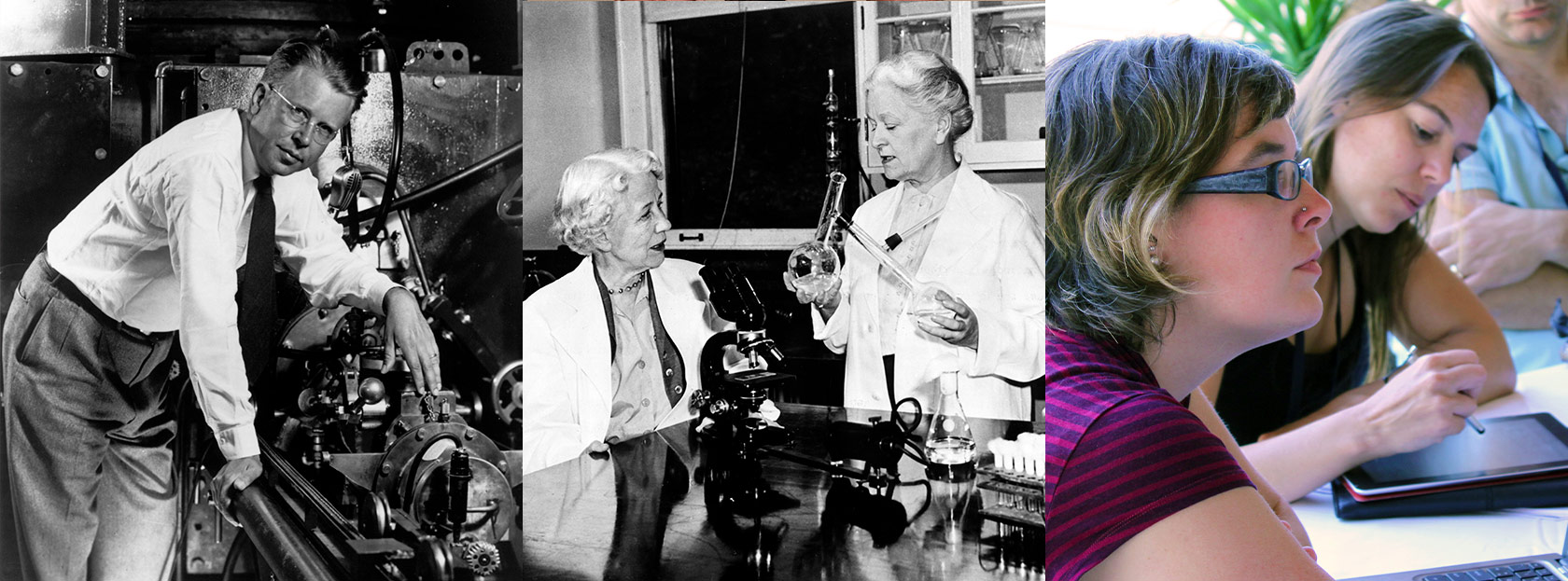
An experiment in transformative researchResearch Corporation for Science Advancement (RCSA) officially announces the creation of a new grants program to support early career academic researchers.
Scialog® is a multi-year program designed to accelerate the work of 21st-century science by funding individuals or multi-disciplinary teams to pursue transformative research, in dialog with their fellow grantees, on crucial issues of scientific inquiry. All Scialog awardees will come together once a year for the next three years at Biosphere 2, in Arizona, to share insights, discuss collaborative projects, and build a vibrant network of researchers focused on a critical scientific issue.
The program's first three-year round is called Scialog 2009: Solar Energy Conversion.
That's right -- RCSA, a small, private foundation with only a few million to spend ($3.2 million, to be precise), is moving boldly to support solar energy research, a field in which substantial government funding is available. Why are we doing this?
For the same reason, for example, that Dr. Roger Angel, a University of Arizona astronomer and one of the world's premier designers of large, technologically advanced, earth-based telescopes, turned to designing solar energy concentrators several years ago. Angel, a MacArthur fellow, told a reporter that building telescopes while Earth is facing a dire threat from global warming is like playing music on the deck of the Titanic.
Energy is the most important issue facing humanity in the 21st century, because everything else -- security, food, water, health, and prosperity -- depends upon progress in this area. And we know three things: 1) Our current use of fossil fuels is leading to deleterious effects on the environment, including global climate change; 2) There are limitations on the amount of fossil fuels available, and much of the remaining reserves are in countries with serious political and security problems, and; 3) The only way this crisis is going to be solved is by creating sustainable, renewable energy.
In short, the directors, officers and staff of RCSA believe we must lend our weight as a foundation to emphasize that this is the preeminent problem in the world today and that it must be addressed. We hope our action also conveys the message that it's everyone's responsibility to try to make what difference we can in order to ensure not only that our civilization continues to thrive but also advances to a sustainable future.
Fortunately, RCSA is in a position to contribute in a unique way. By focusing on early career researchers -- those who have just received tenure -- we're supporting a cohort that doesn't always have an easy time getting funding, yet who are in a position to take high risks because tenure confers the academic freedom to pursue bold new ideas. And these are researchers who have another 20 or 30 years ahead of them as active scientists; if they don't rise to face this challenge -- which likely requires meeting the energy needs of 10 billion people with 20 - 30 terawatts of power generated from sustainable resources as we approach the midpoint of the century -- who will?
Clearly, there's no way to get there unless we create fundamental scientific breakthroughs; Scialog represents one small experiment in how to create those breakthroughs. By emphasizing cross-boundary collaboration and long-term community building among those scientists in the best position to take risks, we hope to ignite a transformative spark that will alter existing paradigms and create pathways to new frontiers.
Igniting a transformative spark is precisely what RCSA has been doing for nearly a century. With Scialog, we hope to take our mission of science advancement to an even higher level. Our goal is nothing less than to help save the planet.
Dr. Richard Wiener, RCSA Program Officer
-------------------------------------------------------------------------------------------------------------------------------
High-quality science education is an essential component of America’s long-term prosperity and security. No one knows this better than the men and women who teach high-school science. But until now no one has asked them to describe the challenges that diminish their professional status: their loss of autonomy in the classroom; having little say in school and school-district policies; inflexible government-mandated tests, which, increasingly are being used to judge not just their pupils’ but their own competence; lack of support staff, and too much “administrivia” wasting their time. In this book, education writer Sheila Tobias and high-school science chair Anne Baffert report from hundreds of teacher interviews and website postings, that there are ways for science teachers, in collaboration with scientists and willing school administrators, to reverse these trends.
Download: Science Teaching as a Profession